Translating Museum-Based Science into Classroom Practice: Dinosaur Hand Structures
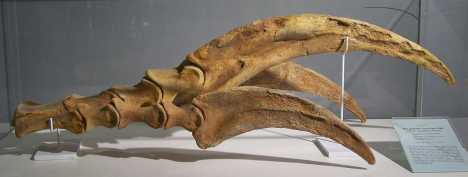
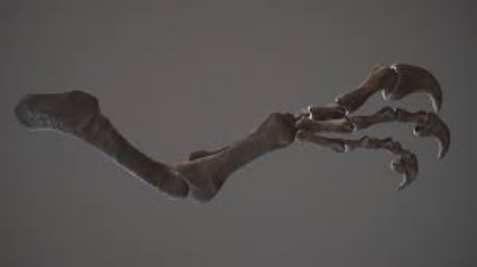
Therizinosaurus forearm
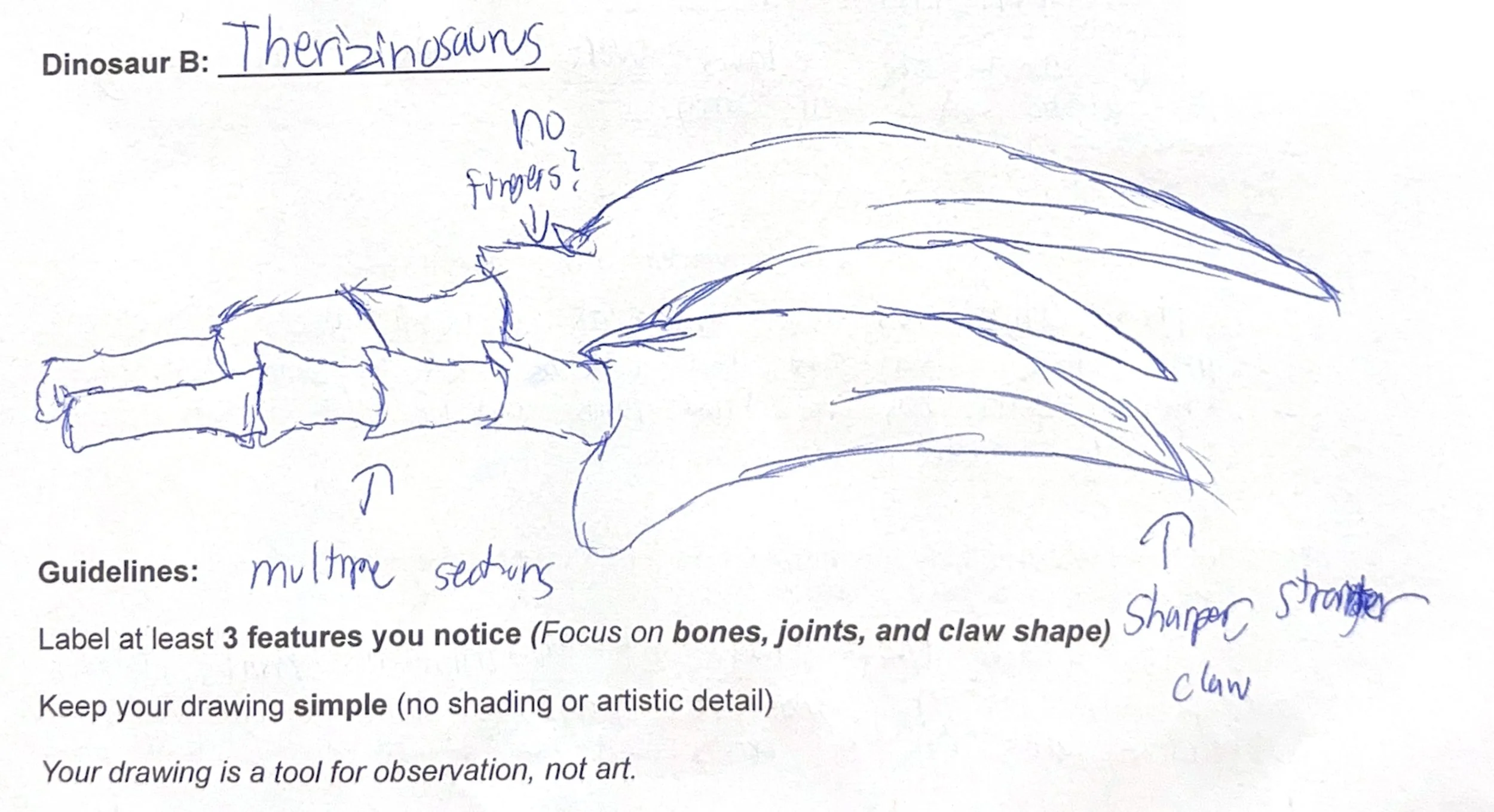
Student sketch of Therizinosaurus forearm
Context
Professional Development at flagship museums, like the American Museum of Natural History, provides teachers with access to rich scientific content and authentic specimens. These experiences emphasize careful observation and engagement with real-world science.
More often than not, the majority of teachers leave great Professional Development thinking “that was interesting… but how will I fit this into my class?”
Design Challenge
How can a museum-based Professional Learning Experience be adapted into a task that is both specific and immediately usable in a classroom while preserving deep scientific thinking?
Instructional Approach
One portion of a recently attended full day workshop, focused on the evolution of dinosaur and bird structures, was redesigned using a structured comparative observation model that could be completed in a standard class period.
Students are guided to:
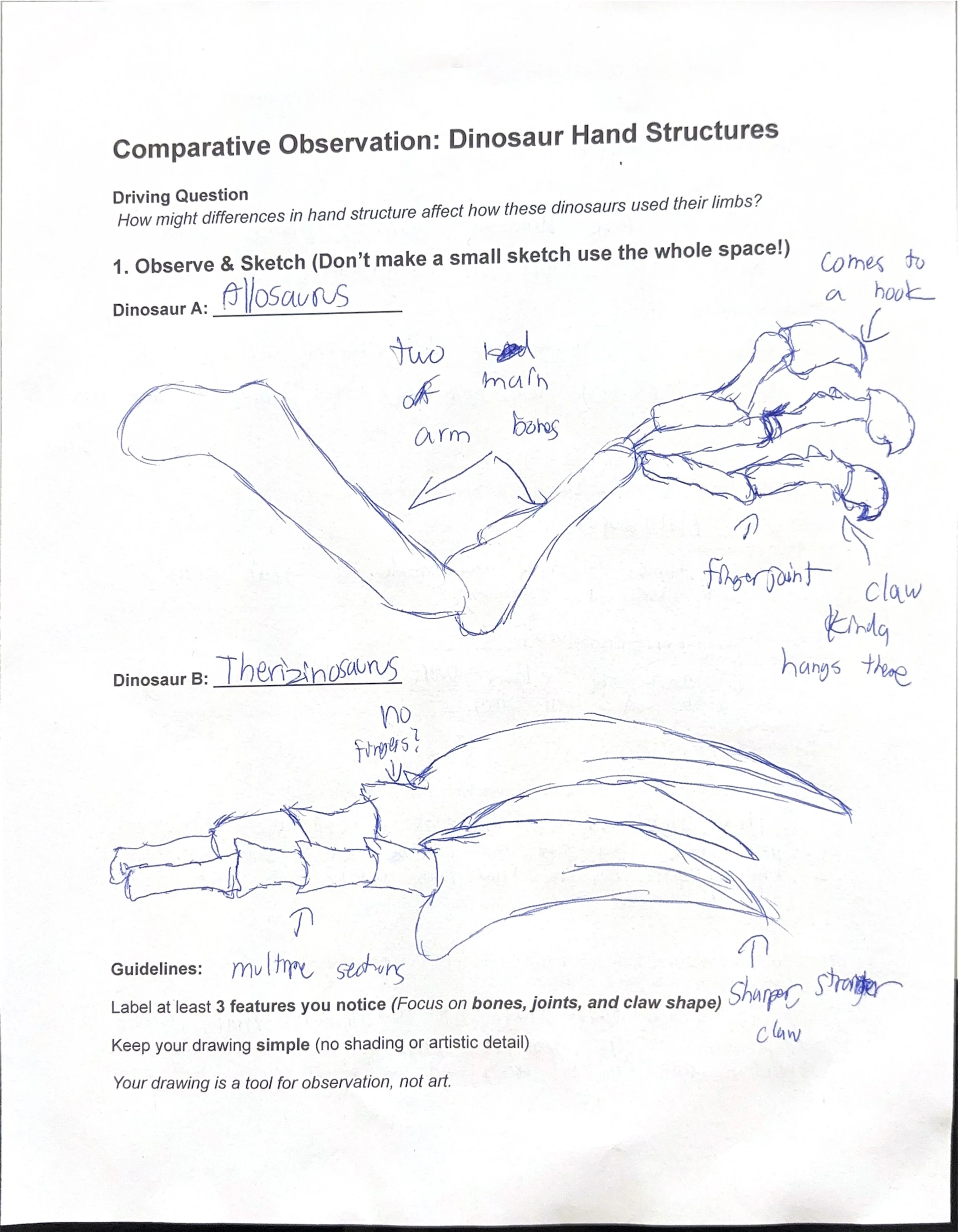
● Sketch two related specimens (e.g., dinosaur hand structures)
● Identify specific similarities and differences
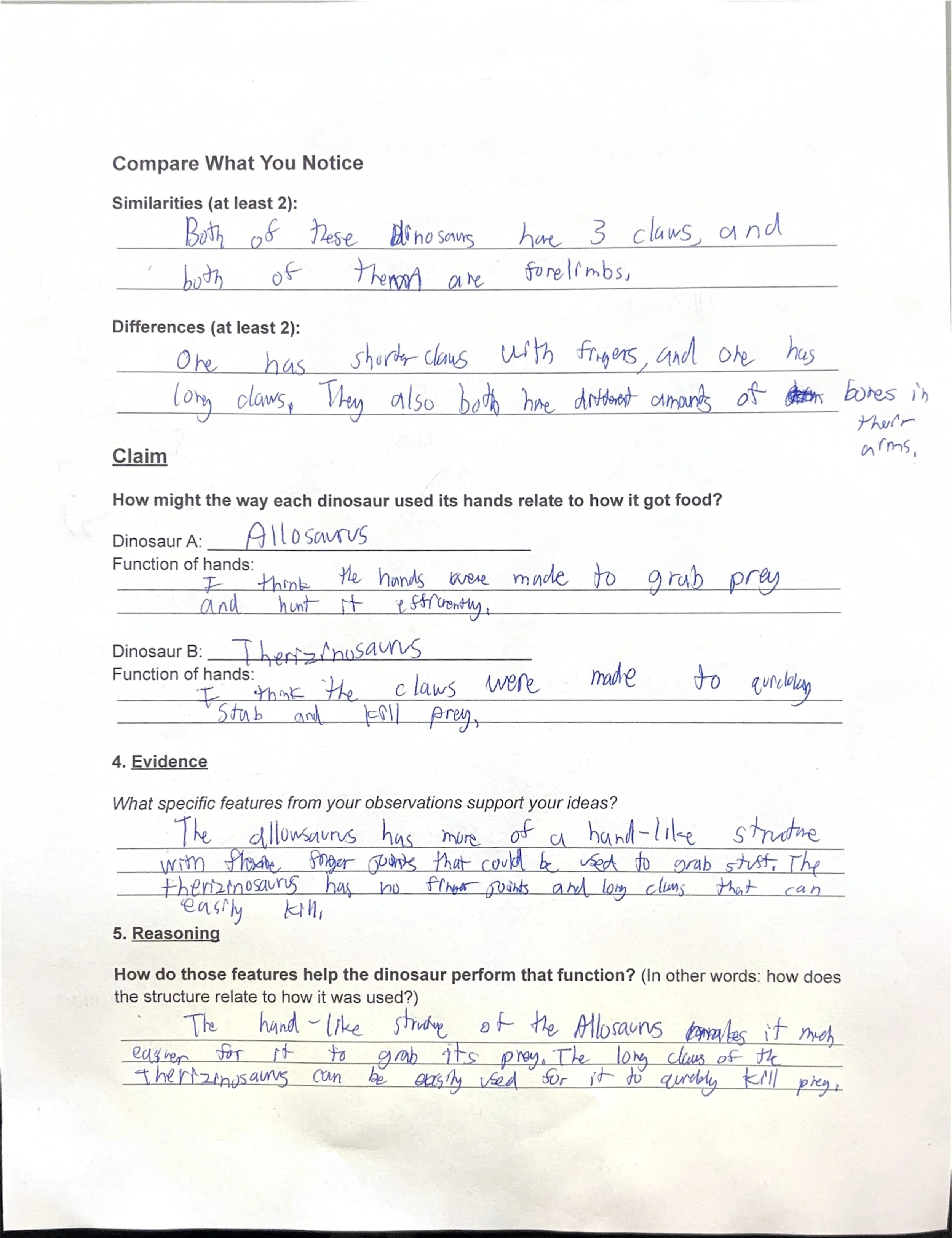
● Develop claims about how each structure might function
● Support those claims with evidence from their observations
● Explain how structure relates to function and survival
Drawing is used not as an artistic exercise, but as a tool to focus attention and support precise observation.
Instructional Artifact
An observation guide was developed to support this process.
The worksheet:
● Presents a clear driving question
● Structures side-by-side comparison
● Guides students from observation → comparison → explanation
● Includes light scaffolds to support evidence-based reasoning
The activity can be used during a museum visit or adapted for classroom use with images or models.
Why This Works
This approach maintains scientific rigor while increasing immediate usability:
● Focuses attention through structured drawing
● Promotes close observation of physical features
● Supports comparison as a core scientific practice
● Guides students toward evidence-based explanations
● Connects biological structures to function and survival
Classroom Impact
Students move beyond identifying features to explaining how and why structures function. The task supports the development of:
● observational precision
● comparative reasoning
● evidence-based explanation
This creates a direct bridge between real-world scientific specimens and classroom learning. In a museum setting it also shifts the student from a passive viewer role to that of an active observer and contributor of understanding.
Next Steps
This comparative observation model can be extended to other content areas (e.g., bird adaptations, ecosystems, fossils) to create a set of materials that support teachers in translating complex science without requiring them to redesign a full day’s learning into a classroom task.
Allosaurus Fossilized Arm and Therizonasaurus Arm
Allosaurus
Forelimb Length: 34 - 36 inches. Three fingers tipped with large, sharp claws 6–8 inches long. Allsaurous teeth were serrated and blade-like (up to 4 inches long)
Therizinosaurus
These forelimbs are among the longest known for any bipedal dinosaur and were tipped with massive claws reaching up to 1 meter ( 3.3 feet) in length. Therizinosaurus had small flat teeth.